
Key points
- Fit the work to the person
- Posture and repetition matter
- Adjust early, not late
- Prevention beats treatment
Ergonomics: what to know
Ergonomics is the science of fitting work to the human body, rather than forcing the body to fit the work. Poor ergonomics causes musculoskeletal disorders — back, neck and shoulder pain, repetitive strain, nerve compression — that are among the leading causes of lost work time and chronic discomfort in the modern workforce. Most of this is preventable, and most prevention is simple.
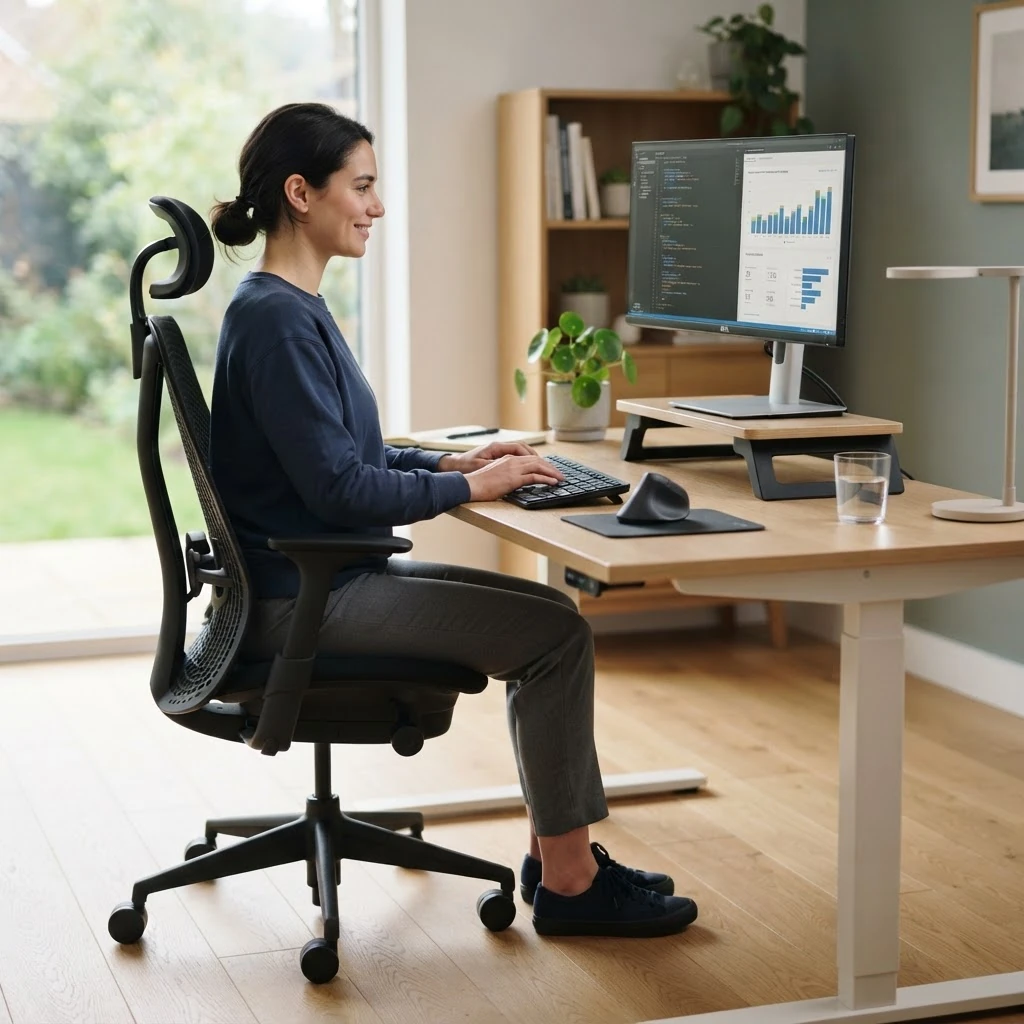
For desk workers, the essentials are well established. An adjustable chair supporting the lower back, feet flat on the floor or a footrest; screen at roughly eye level and an arm's length away; keyboard and mouse positioned so wrists stay neutral and shoulders relaxed; and regular movement breaks to interrupt sustained posture. None of this is expensive; all of it is effective, and most of it is ignored.
Laptops are an ergonomic compromise. Working for long periods on a laptop forces a choice between straining the neck (screen too low) or straining the arms (keyboard too high). A separate keyboard and mouse, with the laptop raised to eye level, resolves this almost entirely. For anyone working at a screen for most of the day, this single, inexpensive adjustment is transformative.
For physical roles, the same principles apply in different form: neutral posture (joints in their natural alignment), reduced force and repetition, rotation of tasks to vary the load, and well-designed tools and workstations that keep heavy or repetitive work within easy reach and a comfortable range. Lifting technique matters — bend the knees, keep the load close, avoid twisting under load — but good design that reduces the need to lift awkwardly matters more.
Early signs — stiffness, aching, tingling, numbness, recurring discomfort at the end of a shift — are signals to adjust, not warnings to push through. These symptoms are the body asking for a change before it becomes an injury. Ignoring them turns a reversible warning into a chronic problem; responding to them early usually prevents the injury entirely.
An ergonomic assessment identifies risks before they become injuries. A short, structured review of a workstation, a task or a process can reveal simple changes — a different chair height, a repositioned monitor, a tool redesign, a task rotation — that prevent months or years of discomfort. Prevention is always cheaper than treatment, and ergonomic prevention is among the cheapest and most effective available.
Movement is part of ergonomics. No posture, however perfect, is healthy if held without variation for hours. The best posture is the next one — regular changes of position, brief standing, walking and stretching prevent the static loading that causes most desk-related pain. The ideal ergonomic setup is one that also lets the body move often. Adjust early, move often, and treat comfort as a feature of the work, not an afterthought.
This article provides general educational information. It does not replace advice from a qualified health professional.