Key points
- Hearing loss is permanent
- Measure the risk
- Protect consistently
- Culture normalises protection
Noise at work: what to know
Noise-induced hearing loss is permanent and irreversible — but it is entirely preventable. It develops slowly and painlessly, often unnoticed until significant damage has occurred, because the body has no pain receptors in the inner ear to warn of harm. By the time someone notices they're struggling to follow conversation in a crowd, the damage is done and cannot be undone.
The risk depends on both how loud a sound is and how long exposure lasts. A brief, very loud noise can damage hearing instantly, but the far more common workplace pattern is lower-level exposure sustained over hours, days and years. The combined dose is what matters, which is why a noise survey — measuring actual exposure across a shift — is the only reliable way to know whether action is needed.
Audiometric testing tracks hearing over time so that early changes are caught before they become disabling. Baseline testing at the start of employment, followed by periodic re-testing, reveals shifts that the person cannot yet feel. These early shifts are the warning the inner ear cannot give; acting on them — by reducing exposure — can prevent the loss from deepening.
Controls follow the hierarchy. Reduce noise at the source first — quieter machinery, damping, isolation — then isolate people from remaining noise through barriers and distance, then limit exposure time through rotation, and only then rely on properly fitted hearing protection as a final layer. PPE is essential in many settings, but it is the least reliable control because it depends entirely on people using it correctly, every time.
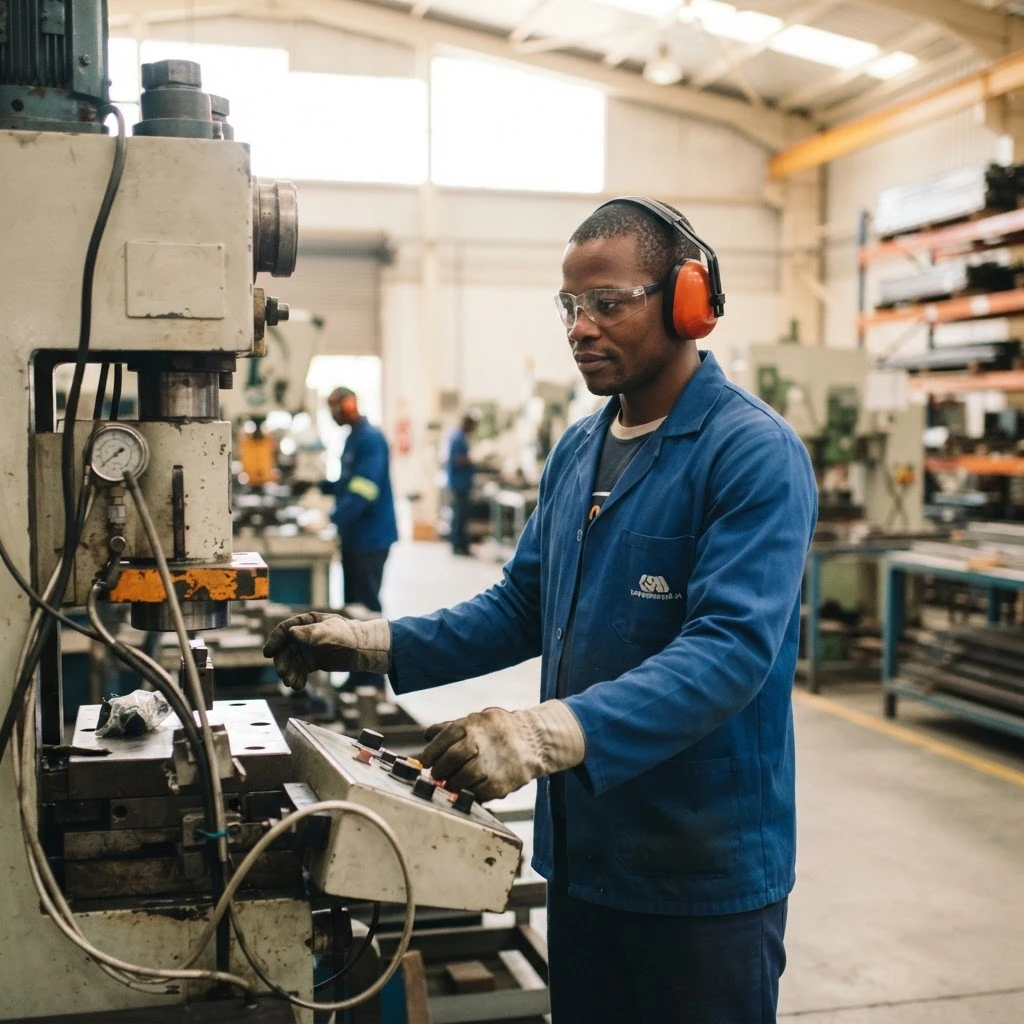
Hearing protection only works if worn correctly and consistently. A protector worn for 90% of a noisy shift provides far less than 90% of its protection — removing it even briefly dramatically reduces its benefit, because the unprotected intervals let in the full dose. Fit matters too: poorly fitted or worn-out protectors offer a fraction of their rated performance.
A culture that normalises protection — not one that treats it as optional or uncool — is what actually saves hearing. When protection is the default, when everyone wears it including senior staff, and when the equipment is comfortable, available and well-maintained, people protect their hearing without thinking about it. When it's treated as an inconvenience or a sign of weakness, people go without, and the loss accumulates silently.
Hearing is one of the great underappreciated assets of a working life, and once lost it does not return. If you work in a noisy environment, wear your protection every time, get your hearing tested regularly, and report noise concerns. If you manage a noisy workplace, measure, control, protect and lead by example. The prevention is entirely in our hands.
This article provides general educational information. It does not replace advice from a qualified health professional.