
Key points
- Stable energy beats spikes
- Hydration is foundational
- Small changes compound
- Consistency over perfection
Nutrition for sustained energy at work: what to know
What you eat directly affects your energy, focus and mood — often more powerfully than the workload itself. The afternoon slump many people experience is frequently less about how much they have to do and more about what was, or wasn't, eaten earlier in the day. Food is fuel, and the quality and timing of that fuel shows up in your ability to think clearly and sustain effort.
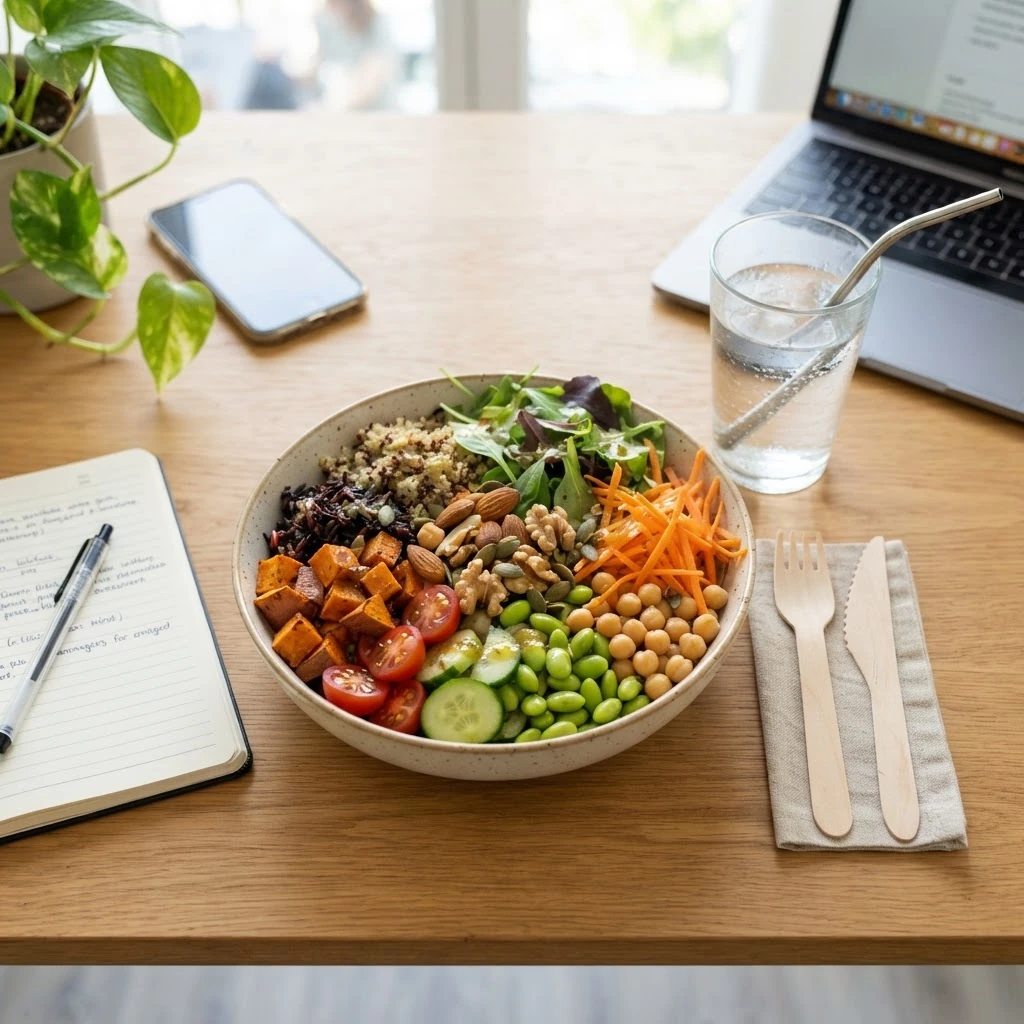
Stable energy comes from balanced meals that combine protein, complex carbohydrates, healthy fats and plenty of fibre. Whole grains, legumes, vegetables, fruit, nuts, eggs, fish and lean protein release energy slowly and keep blood sugar steady. Highly processed, sugary foods cause energy spikes followed by crashes that leave you reaching for more — a cycle that exhausts rather than sustains.
Breakfast sets the tone, but it doesn't have to be elaborate. Something with protein and complex carbohydrate — eggs on wholegrain toast, oats with nuts and fruit, yoghurt with seeds — steadies the morning far better than a pastry and coffee, which deliver a spike and a fall by mid-morning. If you skip breakfast, ensure your first meal is balanced rather than grabbed.
Lunch is the meal most often compromised at work — skipped, delayed, or replaced with something quick and sugary. A lunch with protein, fibre and colour protects the whole afternoon. Eating away from the screen, even briefly, also improves both the meal and the recovery it provides. A working lunch eaten while scrolling email is neither rest nor nourishment.
Hydration is underrated and over underestimated. Even mild dehydration — as little as one to two percent — measurably affects concentration, mood and reaction time. Keep water within reach and sip through the day rather than gulping when thirsty, by which point you are already behind. Caffeine is fine in moderation, but it is not a substitute for water.
Snacking is not the enemy; mindless snacking is. Planned, balanced snacks — fruit and nuts, yoghurt, vegetables with hummus — bridge energy gaps without the crash. The problem is the office biscuit tin and the desk chocolate: convenient, ubiquitous and designed to be eaten without attention. Replacing the environment around you is easier than replacing your willpower.
You don't need a perfect diet. Consistent, mostly-balanced choices most of the time will serve you far better than occasional extremes — a strict week followed by an abandoned weekend. Nutrition is a long game, and the goal is a sustainable pattern you can live with for years, not a regime you endure for a month. Small, steady improvements beat dramatic, short-lived ones every time.
This article provides general educational information. It does not replace advice from a qualified health professional.